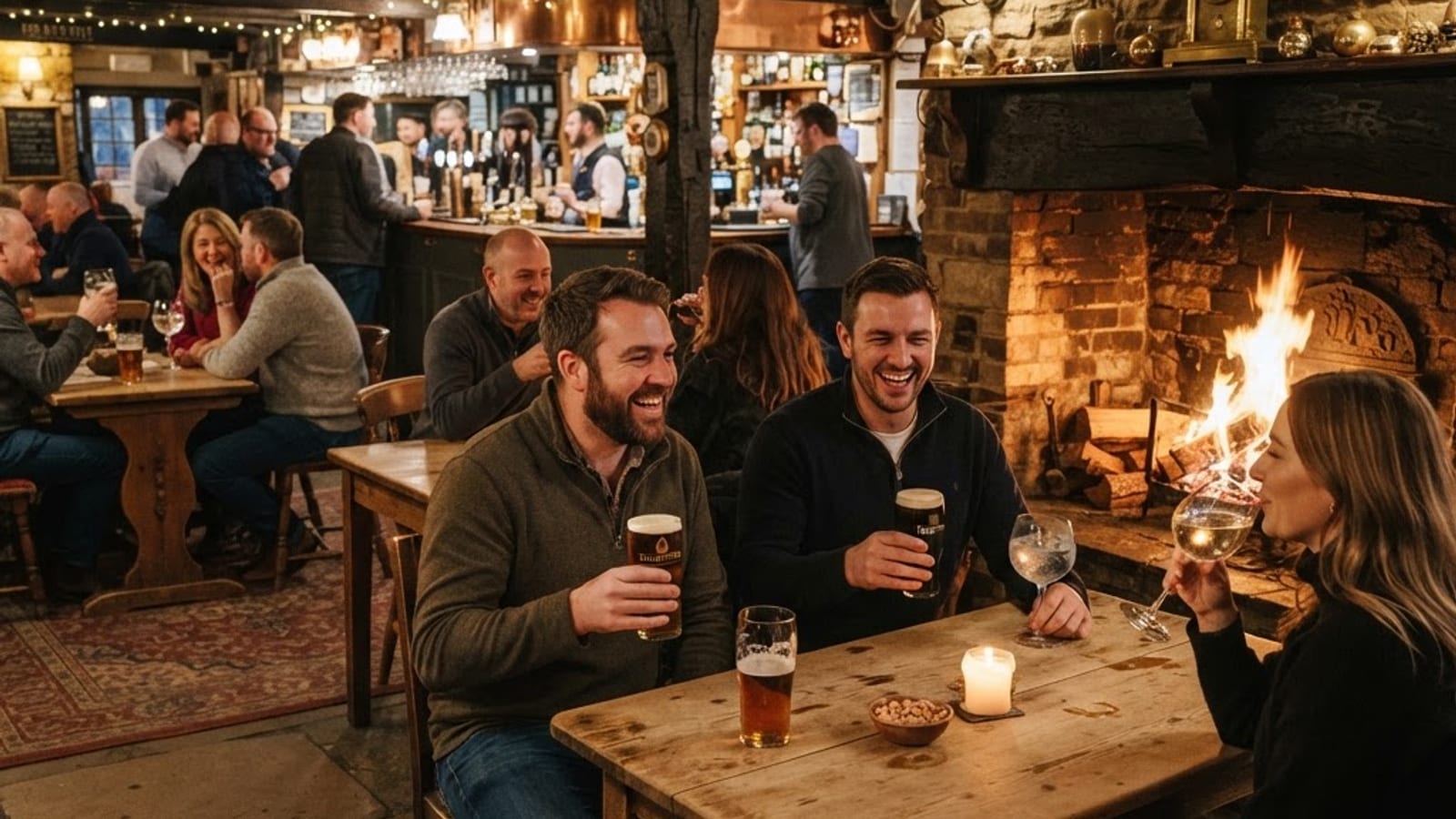
Timing is everything
Your trade does not arrive evenly. It moves with the day of the week, the payday cycle and the season — and most pubs plan for the busy nights while leaving the predictable quiet ones to chance. Here is where the gaps are, and what actually works at each point.
The week: four different pubs, four different jobs
The same room serves a different customer with a different mindset depending on the night. Pick a day to see the pattern and what to do about it. Each of those mindsets is a different search — “quiz night near me” on a Tuesday, “Sunday roast” on a Friday afternoon — which is why local SEO for pubs matters more than ranking for your own name.
Friday: two different pubs in one night
Friday is really two trading periods bolted together. An after-work crowd that arrives early, drinks fast and often leaves by eight — then a second, slower evening crowd who want a table. Pubs that plan for one and not the other leave money behind.
Make the early window easy to walk into
The after-work crowd rarely books. They decide on the walk from the office and want to know you have space. A visible 'walk-ins welcome until 7pm' line does more for this crowd than any offer.
Turn tables deliberately, not accidentally
If you take bookings, a 6pm and an 8:30pm sitting on the same table doubles that table's Friday. Say the sitting length out loud when they book so nobody feels rushed out.
Your kitchen close time is a search query
Late finishers genuinely search for pubs still serving. If your last orders time is buried in a PDF or only on Facebook, you are invisible to the exact person who wanted to spend money at nine o'clock.
The month: payday spikes and the mid-month valley
Most UK salaries land on the last working day of the month. That creates a reliable peak, and a reliable trough about a fortnight later that repeats twelve times a year. Tap a phase to see what it needs. The payday peak is the one night you cannot afford a booking form that fights back, which is the practical case for a properly built pub website.
Relative trade through the month
The mid-month lull: the gap that actually hurts
The stretch roughly ten days to a fortnight after payday is the hardest trading period in the month, and it repeats twelve times a year. It rarely gets planned for because it is nobody's crisis — it is just quiet. This is where an owned list earns its keep, because you can create demand rather than wait for it.
- Email or text your list with something specific and dated. This is the one time a genuine offer pays for itself.
- Lead with value, not luxury: a fixed-price midweek plate lands far better now than a premium special.
- Run your recurring midweek fixture hardest through this window — the habit carries people in when cash is tight.
To be straight with you: the heights above show the shape of the month most landlords describe, not measured data from your pub. Your own till will tell you the real pattern — and if you are weekly-paid or student-heavy, your cycle will look different. Use this to know where to look, then check it against your own takings.
The year: what people want from a pub changes with the light
Gardens in July, fires in November, and a January where half your regulars are off the drink. Each season rewards something different. Most of it only works if the seasonal detail — garden open, Christmas bookings, changed hours — actually reaches people, which is what your Google Business Profile is for.
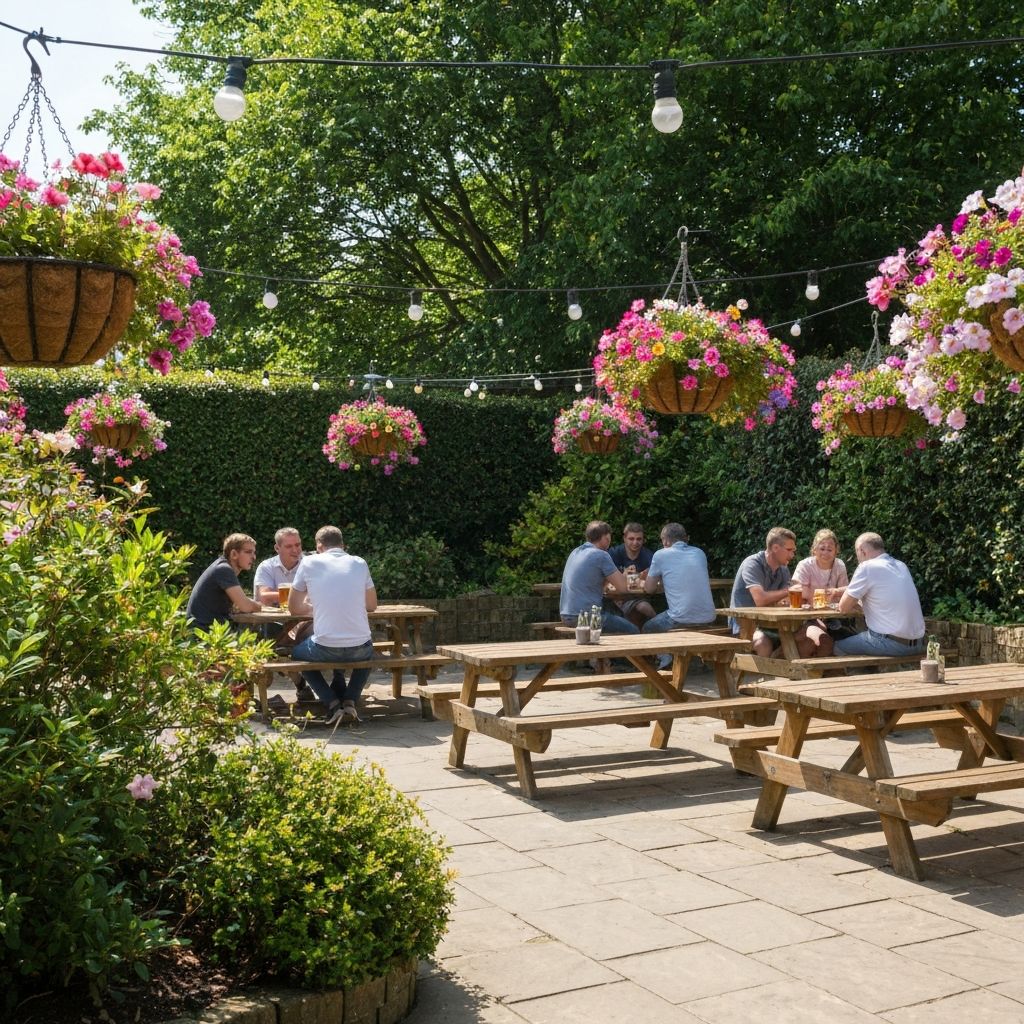
Summer trade is weather-led and decided at short notice, often the same afternoon. If you have outdoor space it becomes the single biggest reason someone picks you, so it needs to be obvious before they arrive rather than a nice surprise once they do.
- Say you have a garden in plain words where a phone shows it first. 'Beer garden' is what people actually search.
- Show it in daylight with people in it. An empty garden at dusk sells nothing.
- Answer the shade, dogs and food-outside questions up front — they decide it more often than the drinks list.
- Weather turns intent on and off within hours, so short-notice posts and messages work better now than any other season.
Three questions worth being honest about
None of the timing above helps if the basics are getting in the way. These are the three we find broken most often.
1. Is your menu a normal web page rather than a PDF?
2. Is your Google Business Profile accurate right now, including opening hours?
3. Can someone book a table or call you within two taps of landing on your site?
0 of 3 answered. Answer all three for a recommendation.
Know your calendar. Then make sure your website can take the booking.
Timing tells you when people are looking for you. Your website decides whether they get through. Check yours in about ten seconds, or have us go through it properly and tell you what we'd change.
Everything included for £99/month. No setup fee, rolling monthly. See what's included